Articles in this Volume

Research Article Open Access
The impact of hospital accreditation on medical record retrieval in a certain hospital
Objective To explore the causes of delayed medical record archiving in a certain hospital and propose corresponding improvement measures to support hospital accreditation. Methods Discharged medical records from May 2023 to April 2024 in the hospital were selected as the control group, and those from May 2024 to April 2025 as the observation group. Administrative functional departments were organized to analyze the 2-day archiving status of medical records in the control group and propose scientific and reasonable improvement strategies. Results The 2-day archiving rate of the observation group was 1.6% higher than that of the control group. The archiving status of surgical medical records was relatively poor. Conclusion Guided by hospital accreditation indicators, Multi-Disciplinary Team (MDT) collaboration among administrative departments can improve the 2-day archiving rate.
Show more
Read Article PDF
Cite
Research Article Open Access
Advances in the treatment of cancer-related fatigue in patients with advanced gastric cancer
Cancer-Related Fatigue (CRF) is one of the most common manifestations of Cancer-Related Distress (CRD). CRF in patients with advanced gastric cancer is a complex condition involving multiple contributing factors. It is closely associated with cancer cachexia caused by the tumor itself and is also related to various adverse effects following chemotherapy, targeted therapy, immunotherapy, and surgical treatment. In addition, psychosocial factors such as anxiety and depression significantly exacerbate patients' experience of fatigue. Current diagnostic and therapeutic strategies for CRF in advanced gastric cancer emphasize multidisciplinary comprehensive intervention. Western medical treatment primarily focuses on etiological management, while integrated traditional Chinese and Western medicine demonstrates unique advantages in holistic regulation. This integrative approach not only helps delay disease progression but also improves the quality of life of patients with advanced gastric cancer. This article aims to review the relevant etiological factors of CRF in advanced gastric cancer and recent research progress in etiological treatment through integrated traditional Chinese and Western medicine.
Show more
Read Article PDF
Cite
Research Article Open Access
Analysis of similarities and differences between Banxia Xiexin Decoction and Shengjiang Xiexin Decoction inTreatise on Febrile Diseases
This paper focuses on two classical formulas in theTreatise on Febrile Diseases (Shanghan Lun) used for regulating spleen and stomach qi dysfunction and treating syndromes with concurrent cold and heat patterns—Banxia Xiexin Decoction and Shengjiang Xiexin Decoction. Banxia Xiexin Decoction, with Banxia (Pinellia Rhizome) as the principal herb and combined with Huangqin (Scutellaria Root), Huanglian (Coptis Rhizome), Ganjiang (Dried Ginger), and others, seeks to harmonize the interplay between cold and heat, resolve focal distension, and specifically address epigastric obstruction caused by spleen and stomach disharmony with mixed cold-heat patterns. In contrast, Shengjiang Xiexin Decoction involves a refined adjustment of herbal proportions, with Shengjiang (Fresh Ginger) as one of its principal constituents, emphasizing its gentle antiemetic, qi-regulating, and water-metabolizing properties, providing targeted treatment for epigastric fullness and vomiting induced by water-heat accumulation and gastric deficiency with food stagnation. This study conducts an in-depth comparison from the perspectives of herbal composition, therapeutic emphasis, core pathomechanism, and clinical application, analyzing the formulaic wisdom of "originating from the same source but each with a specialized focus", and revealing their complementary value in treating spleen and stomach disorders. The findings provide theoretical support and practical reference for syndrome-based treatment of modern gastrointestinal diseases and offer a perspective for expanding integrated Chinese and Western medicine approaches.
Show more
Read Article PDF
Cite
Research Article Open Access
Dynamic analysis of threshold characteristics and seasonal impact in the seasonal influenza SVEIRL model
Article thumbnail
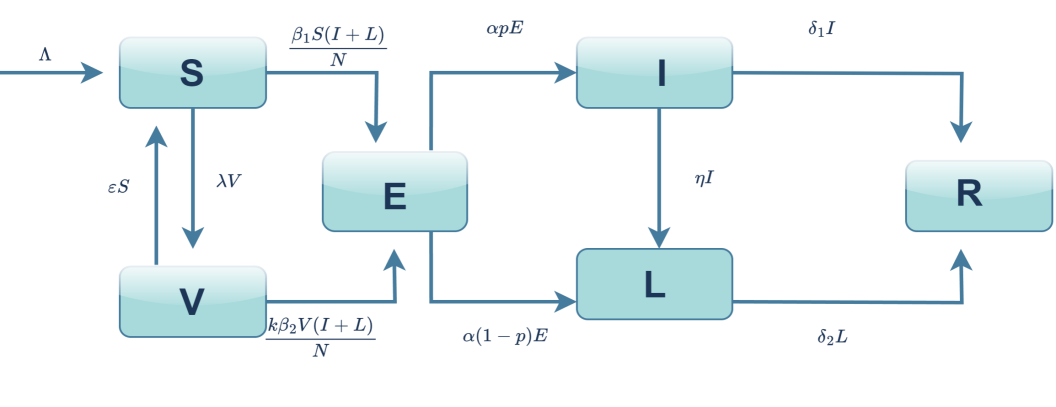
In this paper, a periodic seasonal influenza SVEIRL model is constructed to explore the mechanism by which seasonal influenza factors exert social impacts. Through dynamic analysis of the model and verification via numerical simulations, it is revealed that seasonal factors exhibit a significant positive correlation with both the basic reproduction number and the final epidemic scale. Using surveillance data from institutions including the Chinese National Influenza Center and the Public Health Science, the model is applied to simulate the trends of influenza epidemic in China. Under multi-dimensional scenarios that include different years, provinces, influenza subtypes, and the proportion of influenza-like cases in northern and southern regions of China, approximate values of seasonal factors for each scenario are calculated using methods such as genetic algorithms and parameter fitting. The findings reaffirm that the intensity of seasonal factors is positively correlated with the scale of influenza epidemics.
Show more
Read Article PDF
Cite
Research Article Open Access
Advances in Engineering CAR-T cell therapies
The remarkable success of Chimeric Antigen Receptor (CAR-T) cells in B-cell malignancies has not yet translated to solid tumors. Several factors explain this gap. Solid tumors actively exclude and suppress infiltrating lymphocytes through a complex microenvironment. Their surface antigens are often heterogeneous, making it hard to find a target expressed uniformly on all malignant cells. And the current manufacturing paradigm, autologous and ex vivo, remains logistically challenging and expensive. Recent engineering efforts have taken different tacks. One approach aims at off-the-shelf CAR-T cells, using gene editing to eliminate alloreactivity while preserving function. Another seeks to redesign the CAR itself, for instance with logic-gated circuits that sharpen tumor recognition and limit off-tumor toxicity. A third strategy targets the Tumor Microenvironment (TME) directly, either by remodeling it or by using delivery systems that improve T cell infiltration. Meanwhile, in vivo CAR-T generation, which reprograms T cells inside the patient with targeted nanoparticles or viral vectors, could eventually bypass ex vivo manufacturing altogether. These lines of work are gradually converging, and together they point toward a future in which CAR-T therapy might become effective, safe, and accessible for a wider range of cancers.
Show more
Read Article PDF
Cite
Research Article Open Access
Cervical disc arthroplasty for cervical degenerative disease: a narrative review of outcomes, expanding indications, and complication management
Cervical Disc Arthroplasty (CDA) has emerged as a motion-preserving alternative to Anterior Cervical Discectomy and Fusion (ACDF) for selected patients with cervical degenerative disease, but its optimal indications and long-term risk-benefit profile remain under active debate. This narrative review summarizes representative evidence on the rationale, comparative outcomes, patient selection, multilevel applications, complications, revision strategies, and device-related considerations of CDA. PubMed-based literature relevant to cervical disc arthroplasty, cervical disc replacement, ACDF, cervical radiculopathy, degenerative cervical myelopathy, multilevel arthroplasty, and CDA-related complications was reviewed, with emphasis on randomized trials, meta-analyses, systematic reviews, long-term follow-up studies, and influential narrative reviews. Current evidence generally supports CDA as non-inferior to ACDF in overall clinical outcomes in appropriately selected patients and suggests potential advantages in preserving segmental motion and reducing adjacent segment disease and reoperation. Evidence for contiguous 2-level CDA continues to strengthen, whereas broader multilevel applications remain more selective. Heterotopic ossification, osteolysis, subsidence, migration, and revision surgery remain important concerns. Overall, CDA appears to be an increasingly established option for selected cervical degenerative disorders, but its long-term value depends on strict indications, careful technique, device-specific performance, and continued real-world follow-up.
Show more
Read Article PDF
Cite
Research Article Open Access
Level of stress and coping styles of student nurses in the clinical setting of patient with advance cancer
This study explored nursing students' stress levels and coping strategies when caring for patients with advanced cancer during clinical placements, using questionnaires and in-depth interviews. Results showed that students experienced high stress, mainly due to patients' severe conditions, heavy workload, communication difficulties, and lack of professional confidence. To cope, most adopted emotion-oriented strategies such as seeking social support and engaging in relaxation activities, while some used problem-oriented approaches like improving skills and actively solving problems. The findings suggest that nursing education institutions should strengthen training in psychological support and coping strategies, provide targeted counselling, and enhance students' resilience and professional competence to better adapt to clinical environments and improve care quality.
Show more
Read Article PDF
Cite
Research Article Open Access
Advances in the mechanisms and prevention of chemotherapy-induced hand–foot syndrome
Hand–Foot Syndrome (HFS) is a dose-limiting dermatologic toxicity commonly associated with conventional chemotherapy, significantly constraining antitumor efficacy and impairing patients' quality of life. This paper systematically elucidates the pathogenic mechanisms underlying chemotherapy-induced HFS, highlighting that it is primarily driven by the synergistic effects of localized high drug accumulation, microvascular endothelial injury, inflammatory cascade activation, and oxidative stress, with notable modulation by genetic polymorphisms of metabolic enzymes. In terms of clinical management, an integrated prevention and treatment framework has been established, encompassing basic physical protection, localized targeted therapies, and dynamic dose adjustment strategies. In light of the limitations of the current evidence base, this review further provides a forward-looking discussion on precision-oriented approaches, including genetic prediction and novel transdermal drug delivery systems. The aim is to offer high-level evidence to optimize clinical diagnosis and treatment, and to provide both theoretical guidance and practical references for the prevention and management of HFS.
Show more
Read Article PDF
Cite
Research Article Open Access
T cell genetic profile changes in pancreatic cancer
Article thumbnail
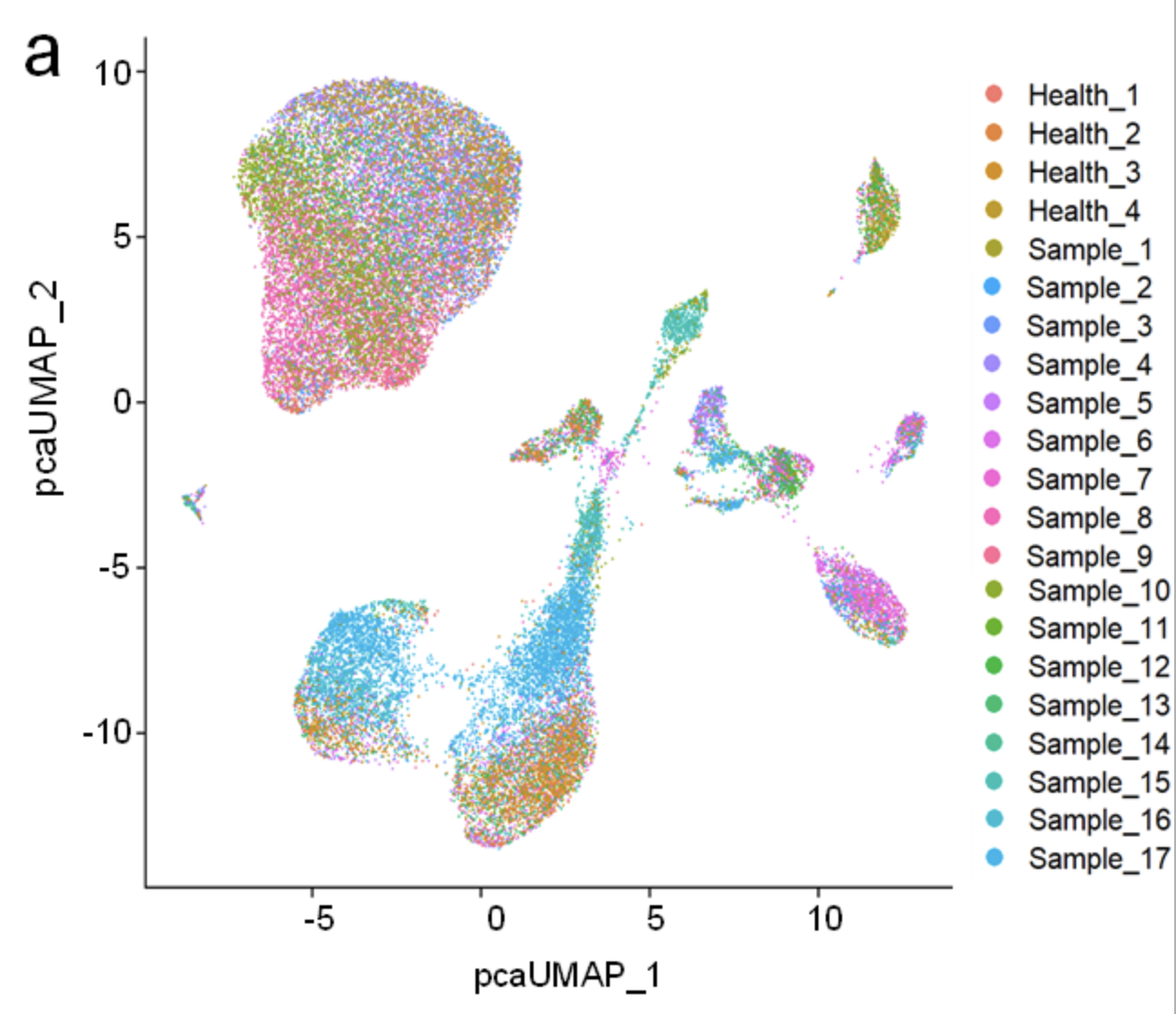
This study utilizes single-cell RNA sequencing (scRNA-seq) to examine the immune landscape of Pancreatic Ductal Adenocarcinoma (PDA), adjacent healthy tissues, and Peripheral Blood Mononuclear Cells (PBMCs), focusing on CD4+ T cells, CD8+ T cells, and other T cell subsets in tumor and healthy samples. Using Seurat for data processing and Monocle3 for trajectory analysis, identified distinct immune cell populations and disease-related pathways were identified. UMAP and PCA revealed separation between tumor and healthy tissues, suggesting immune evasion in the tumor microenvironment. Monocle3 analysis showed complex branching in tumor-infiltrating T cells, indicative of activation and immunosuppressive states. Differential gene expression highlighted key immune-regulatory pathways upregulated in the tumor, supporting immune modulation within the tumor microenvironment. Despite the small sample size of healthy cells, this study provides valuable insights into immune interactions in PDA and PBMC. Future research should focus on larger cohorts to validate these findings and explore therapeutic strategies targeting immune cells in the tumor microenvironment.
Show more
Read Article PDF
Cite
Research Article Open Access
ABC transporters in lung cancer clinical outcome: a systematic review and integrative analysis
Article thumbnail
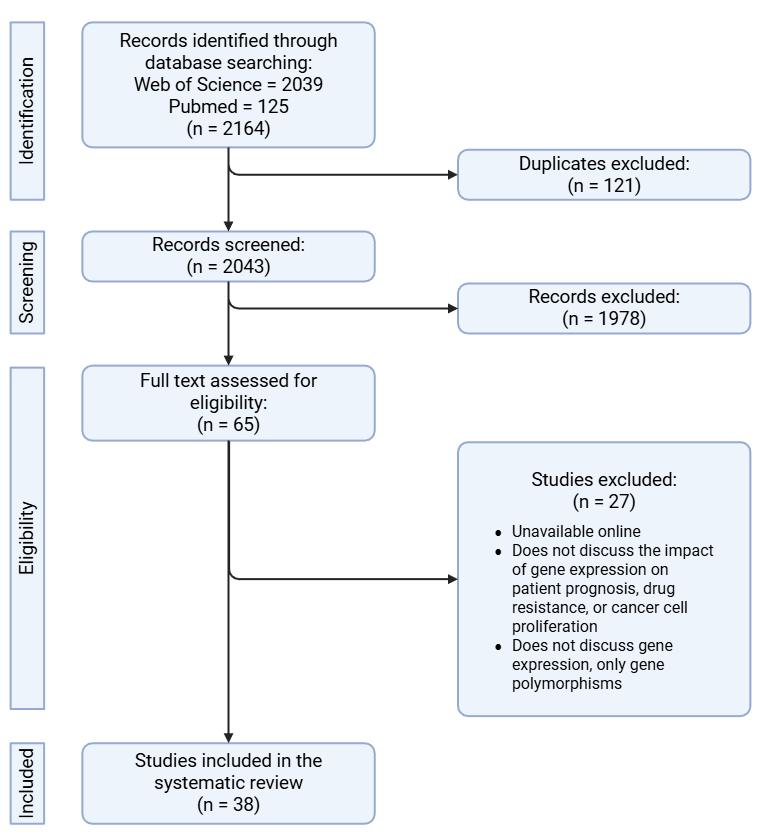
Drug resistance represents a significant factor contributing to poor patient survival and prognosis in lung cancer, frequently mediated by ATP-Binding Cassette (ABC) transporters. This systematic review synthesizes clinical studies, in vitro and in vivo experimental research published between January 2000 and March 2025 in the PubMed and Web of Science databases, alongside analyses of untreated lung cancer cohorts from The Cancer Genome Atlas (TCGA) accessed through the cBioPortal platform. The goal of this review is to evaluate the association between ABC transporter expression, treatment response, drug resistance, and patient survival. Clinical studies have demonstrated considerable heterogeneity in the association between ABC transporter levels in cancer patients and their chemotherapy outcomes. In contrast, non-clinical studies have shown greater consistency in evaluating the roles of certain ABC transporters in drug resistance and tumor progression. Analysis of TCGA data showed that most ABC genes were not intrinsically associated with survival. Overall, our findings indicate that ABC transporters influence lung cancer progression primarily through drug efflux–mediated mechanisms, with limited evidence for intrinsic survival effects in untreated disease. The observed heterogeneity across clinical studies highlights the need for standardized analytical approaches and treatment-specific regimens.
Show more
Read Article PDF
Cite