

About JCTTJournal of Clinical Technology and Theory (JCTT) is a bimonthly open-access, peer-reviewed journal published by EWA Publishing. The journal aims to build an open, standardized and inclusive international medical exchange platform, facilitating collaborative research between global medical scholars, clinical clinicians and laboratory researchers. It connects standardized medical theoretical exploration, clinical technical innovation and real-world medical treatment, centering on normative medical research with profound scientific value, professional technical value and clinical transformation value, and stresses public health security and standardized construction value of clinical research, sharing ethical-compliant clinical experimental schemes and diagnosis-treatment innovation references for hospital clinicians, pharmacy researchers, disease control specialists and medical university teachers to materialize multi-dimensional medical research value in clinical work.For more details of the JCTT scope, please refer to the Aim & Scope page. For more information about the journal, please refer to the FAQ page or contact info@ewapublishing.org. |
| Aims & scope of JCTT are: ·Basic Medicine ·Clinical Medicine ·Preventive Medicine ·Pharmaceutical Science ·Medical Technology ·Nursing |
Article processing charge
A one-time Article Processing Charge (APC) of 450 USD (US Dollars) applies to papers accepted after peer review. excluding taxes.
Open access policy
This is an open access journal which means that all content is freely available without charge to the user or his/her institution. (CC BY 4.0 license).
Your rights
These licenses afford authors copyright while enabling the public to reuse and adapt the content.
Peer-review process
Our blind and multi-reviewer process ensures that all articles are rigorously evaluated based on their intellectual merit and contribution to the field.
Editors View full editorial board

Sydney, Australia

Lahore, Pakistan

Orlando, USA

Atlanta, USA
Latest articles View all articles
Thyroid cancer is a common clinical disease, and surgical resection remains the primary treatment modality, generally yielding a favorable prognosis. However, postoperative infections and related complications not only adversely affect patient outcomes but also prolong hospital stays, increase medical expenses, and impair quality of life. Therefore, effective prevention and management of postoperative infections have become urgent clinical priorities. Based on recent literature, this review summarizes the prevention, treatment, and current research progress regarding postoperative infections following thyroid cancer surgery. The aim is to provide evidence for the early detection, accurate diagnosis, and timely intervention of postoperative infections in patients with thyroid cancer.

 View pdf


This dissertation investigates the extent to which TP53 mutations influence the efficacy of targeted therapies (EGFR-TKIs, ALK-TKIs, and ROS1-TKIs) in the treatment of Non-Small Cell Lung Cancer (NSCLC), which accounts for 85% of all lung cancer cases. To address the core research question, the study adopts a systematic literature review approach, synthesizing data from peer-reviewed clinical studies, meta-analyses, and guidelines published by authoritative bodies such as the FDA and EMA. The research focuses on three main themes: the functional mechanisms of TP53 mutations in driving treatment resistance, the quantitative impact of these mutations on important efficacy parameters (Progression-Free Survival [PFS] and Objective Response Rate [ORR]) across different targeted therapies, and the clinical consequences of TP53 testing for personalized treatment stratification. Key findings show that TP53 mutations exert a moderate-to-strong negative effect on targeted therapy outcomes: reducing ORR by 25 47% and decreasing PFS by 35 63% throughout EGFR, ALK, and ROS1-TKIs. Mechanistically, mutations impair DNA repair, promote tumor angiogenesis, and inhibit apoptosis, whereas a significant exception is the combination of EGFR-TKIs with anti-angiogenic inhibitors, which reduces this effect in select EGFR-positive patients. The study concludes that TP53 mutations are important drivers of lower targeted therapy efficacy, and combining TP53 testing as a complementary biomarker might guide clinical decision-making. However, standardised mutation detection protocols and bigger prospective trials are needed to corroborate findings, particularly for ROS1-TKI therapy and subtype-specific analyses.
View pdf
Background: Low resilience, high stress, and low Socioeconomic Status (SES) are known risk factors for adolescent depression, but their joint effects remain poorly understood. This matched case-control study examined how life events and SES together influence the resilience–depression link in clinically depressed adolescents. Methods: A total of 360 depressed adolescents (aged 11-18) were recruited from outpatient clinics and matched 1:1 by age and sex with 360 healthy controls. Participants completed the Resilience Scale for Chinese Adolescents (RSCA), the Patient Health Questionnaire-9 (PHQ-9), the Generalized Anxiety Disorder-7 (GAD-7), the Adolescent Self-Rating Life Events Checklist (ASLEC), and a family SES index. Conditional logistic regression and hierarchical multiple regression with interaction terms were used to analyze associations, moderation by life events, and the role of SES. Results: Depressed adolescents had significantly lower RSCA (dz = 1.28) and SES (dz = 0.62) and higher ASLEC (dz = 1.52) than controls. In conditional models, each SD increase in resilience reduced depression odds by 77% (OR = 0.23) and each SD increase in life events increased odds 3.1-fold (OR = 3.12), after controlling for SES. Within the depressed group, resilience was negatively associated with PHQ-9 (r = -0.47). Life events moderated this association (interaction β = 0.17, p = 0.003), with resilience less protective under high stress. This moderation effect was significant only in females. SES did not moderate the resilience–depression link but had an independent protective effect on symptoms (β = -0.12, p = 0.01). Including SES as a covariate did not attenuate the life events moderation. Conclusions: Life events, but not SES, moderate the resilience–depression relationship in clinical adolescents, with resilience being less protective under high stress, especially in girls. Low SES independently predicts more severe symptoms but does not alter the stress-resilience dynamic. Comprehensive treatment should address individual resilience, stress reduction, and socioeconomic disadvantage.
View pdf
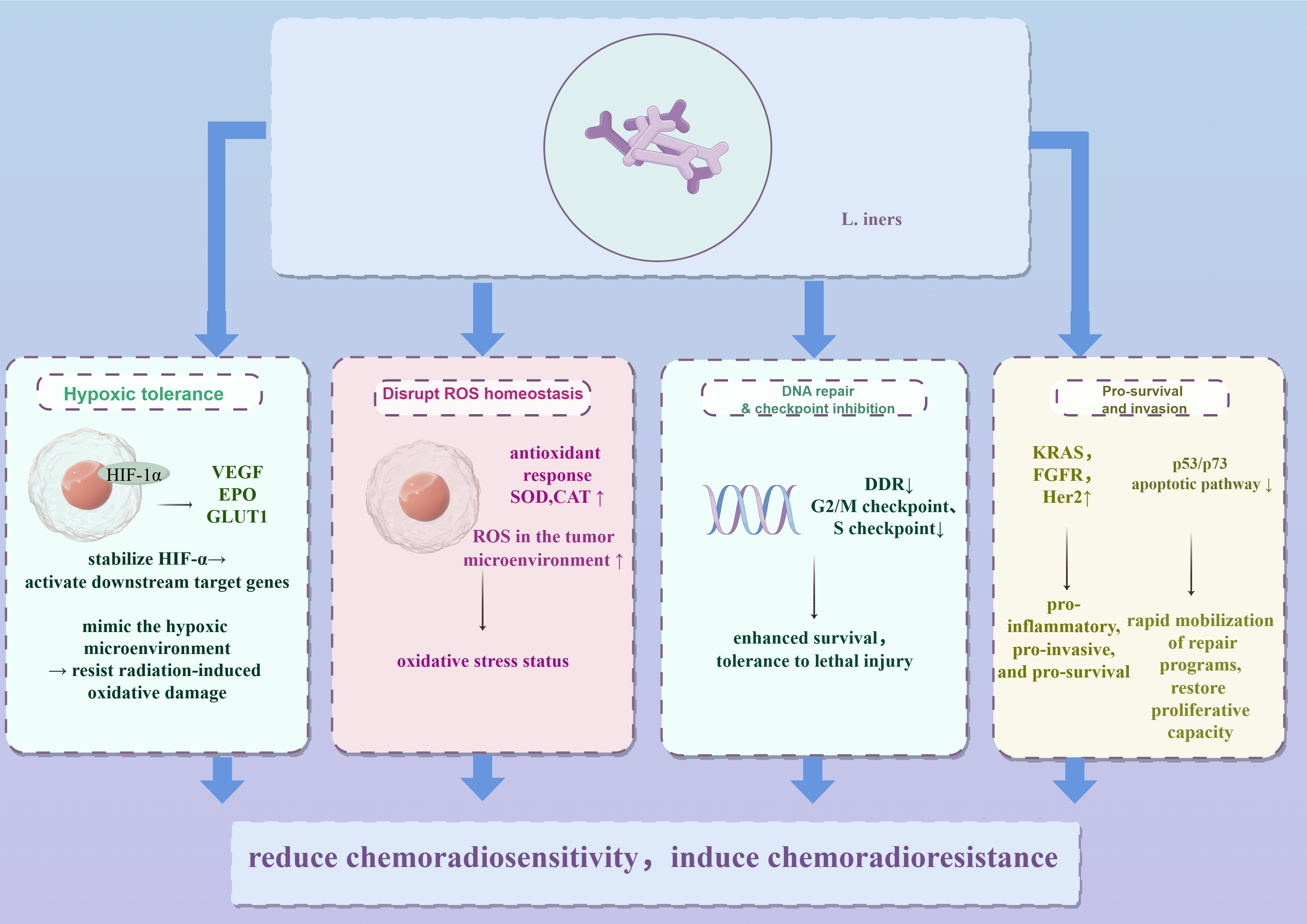
Persistent infection with high-risk Human Papillomavirus (hrHPV) is the central etiological factor in cervical cancer, while the host vaginal microenvironment plays a critical role in disease progression. Lactobacillus iners is one of the most widely distributed lactobacilli in the vagina. Because of its unique biological features, including exclusive production of L-lactic acid and a small genome, it occupies a transitional state within the vaginal ecosystem. Recent studies have shown that Lactobacillus iners (L. iners) plays dual and paradoxical roles in cervical carcinogenesis and progression. In the vaginal microenvironment, L. iners is associated with persistent hrHPV infection and an increased risk of Cervical Intraepithelial Neoplasia (CIN) progression; its protective effects are limited and often coexist with unfavorable inflammatory states. In contrast, within the tumor microenvironment, intratumoral colonization by L. iners can markedly increase L-lactate production, induce chemoradiotherapy resistance in tumor cells, and serve as an independent risk factor for poor prognosis. This review systematically summarizes the biological characteristics of L. iners, its roles and mechanisms in cervical cancer initiation, progression, and treatment resistance, and its translational value as a novel biomarker and potential therapeutic target. Current controversies, limitations, and future directions are also discussed.
View pdf
Volumes View all volumes
2026
Volume 4October 2026
Find articlesVolume 4February 2026
Find articlesVolume 4April 2026
Find articles2025
Volume 3December 2025
Find articlesVolume 3May 2025
Find articlesVolume 3August 2025
Find articlesAnnouncements View all announcements
Journal of Clinical Technology and Theory
We pledge to our journal community:
We're committed: we put diversity and inclusion at the heart of our activities...
Journal of Clinical Technology and Theory
The statements, opinions and data contained in the journal Journal of Clinical Technology and Theory (JCTT) are solely those of the individual authors and contributors...
Indexing
The published articles will be submitted to following databases below: