


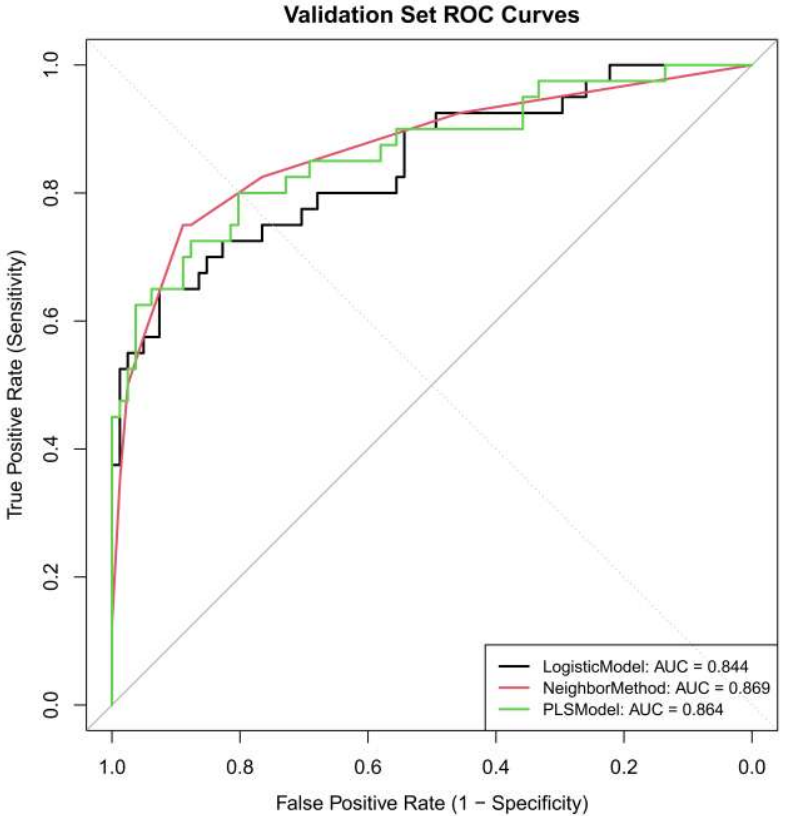
This study enrolled 401 subjects, who were stratified according to the total imaging burden score of Cerebral Small Vessel Disease (CSVD) and divided into a training set (280 cases) and a validation set (121 cases) at a ratio of 7:3. Six variables—age, left ventricular posterior wall end-diastolic thickness, E/e′ ratio, maximum carotid plaque thickness, history of hypertension, and low-density lipoprotein cholesterol—were included, and Logistic regression, K-nearest neighbor, and partial least squares models were separately constructed. Performance was evaluated using the area under the receiver operating characteristic curve, sensitivity, specificity, and decision curve analysis. The results showed that the K-nearest neighbor model achieved the best performance in the validation set (AUC 0.869, accuracy 82.6%, sensitivity 65.0%, specificity 95.1%). SHAP analysis clarified the contribution of each feature, with E/e′ being the strongest predictor (mean absolute SHAP value 0.194), followed by maximum carotid plaque thickness and age (0.085 and 0.062, respectively). Decision curve analysis showed that the model yielded the greatest net benefit at a disease-risk threshold of 35%. With a specificity of 95.1%, the model performed prominently in risk stratification of CSVD patients, could effectively identify low-risk populations and reduce unnecessary imaging examinations, but its sensitivity was relatively low (65.0%), making it more suitable for clinical secondary diagnosis.