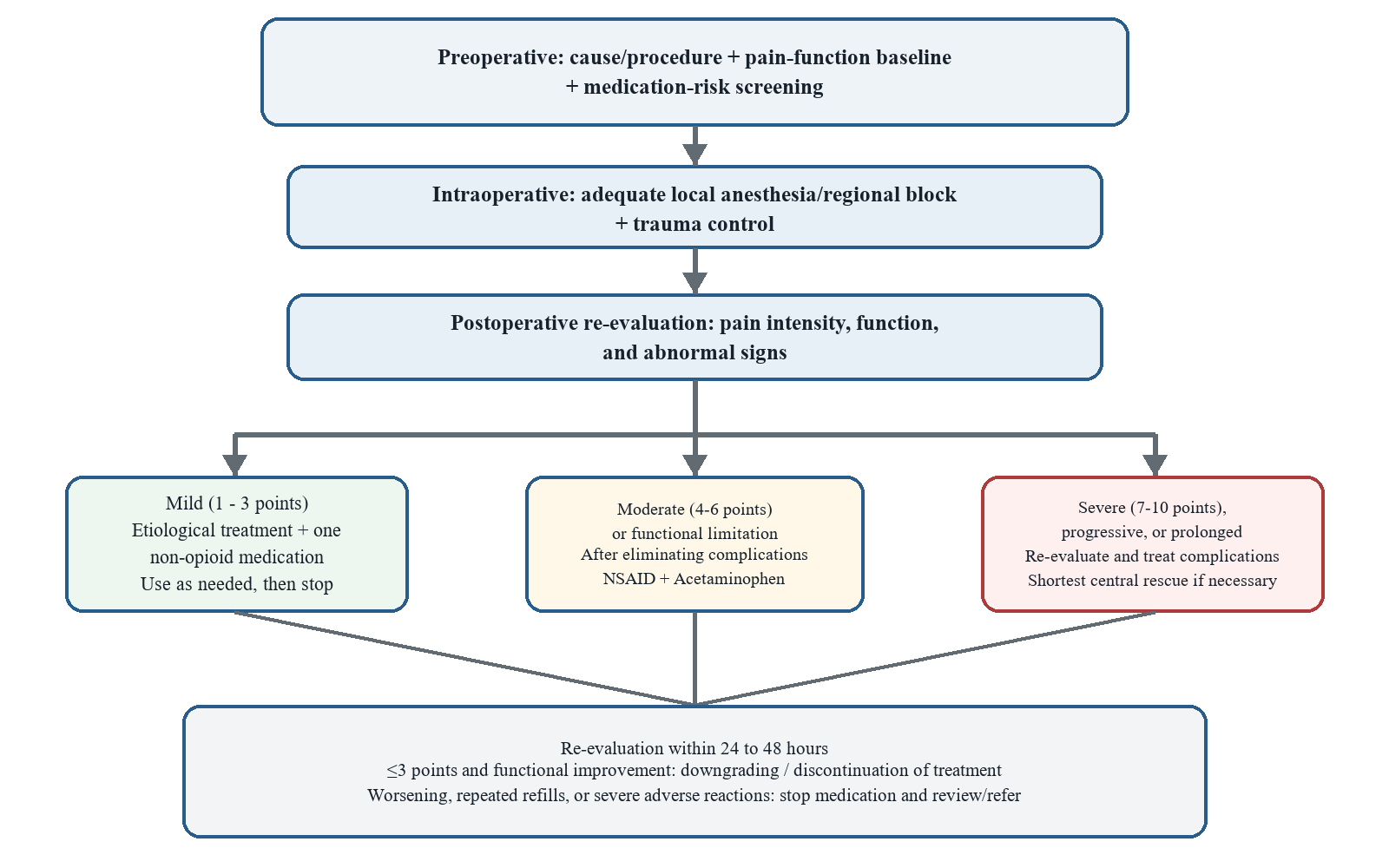
Acute postoperative pain management in oral surgery remains challenged by several persistent issues: irrational opioid prescribing, insufficient analgesia from single-agent regimens, and the absence of standardized stratified care pathways tailored to different surgical procedures. Multimodal analgesia achieves superior pain relief while reducing opioid exposure by simultaneously targeting peripheral inflammation, nociceptive input, and central pain modulation. This narrative review systematically examines oral pain pathways and grading systems, first-line non-opioid analgesics, centrally acting analgesics, perioperative strategies for different surgical approaches, safety risks, and sustained-release drug delivery systems. Available clinical evidence supports Non-Steroidal Anti-Inflammatory Drugs (NSAIDs) used alone or in combination with acetaminophen as first-line therapy for pain following most dental extractions, root canal treatments, and implant surgeries. Opioid agents should be reserved for short-term use only in a small subset of patients with severe breakthrough pain who fail to respond to non-opioid treatments. Tramadol is not recommended as a routine alternative analgesic, and gabapentinoids are not advised for routine use in inflammatory postoperative oral pain. A 2026 systematic review focused on third molar surgery indicates that pregabalin may provide limited pain relief, but with high study heterogeneity and a significantly increased risk of adverse events, which does not support its routine use as a first-line agent. Liposomal and other sustained-release delivery systems can prolong local drug release, however, their real clinical benefits, tissue safety, cost-effectiveness, and standardized preparation in dental practice still require further high-quality clinical evidence. A multimodal clinical pathway based on preoperative risk screening, intraoperative long-acting local anesthesia, and postoperative step-up/step-down analgesic adjustment guided by pain and functional impairment grading can provide a reference for oral surgeons to develop short-course, opioid-sparing, and re-evaluable analgesic regimens.